Primary Years Programme (PYP)
© International Baccalaureate Organization 2025
Takshashila Progressive English School is an IB PYP Candidate School* for the Primary Years Programme. This school is pursuing authorization as an IB World School. These are schools that share a common philosophy—a commitment to high quality, challenging, international education that Takshashila Progressive English School believes is important for our students.
*Only schools authorized by the IB Organization can offer any of its four academic programmes: the Primary Years Programme (PYP), the Middle Years Programme (MYP), the Diploma Programme, or the Career-related Programme (CP). Candidate status gives no guarantee that authorization will be granted. For further information about the IB and its programmes, visit www.ibo.org
What is IB PYP?
The IB Primary Years Programme (PYP) for children aged 3 - 12 nurtures and develops young students as caring, active participants in a lifelong journey of learning.
The PYP offers an inquiry-based, transdisciplinary curriculum framework that builds conceptual understanding. It is a student-centered approach to education for children aged 3-12. It reflects the best of educational research, thought leadership and experience derived from IB World Schools.
The PYP has evolved to become a world leader in future-focused education. The PYP is an example of best educational practice globally, responding to the challenges and opportunities facing young students in our rapidly changing world.
The PYP Curriculum Framework
The PYP curriculum framework begins with the premise that students are agents of their own learning and partners in the learning process. It prioritizes people and their relationships to build a strong learning community.
PYP students use their initiative to take responsibility and ownership of their learning. By learning through inquiry and reflecting on their own learning, PYP students develop knowledge, conceptual understandings, skills and the attributes of the IB Learner profile to make a difference in their own lives, their communities, and beyond.
Embedded in the framework is the recognition of the importance of fostering an individual's self-efficacy. Students with a strong sense of self-efficacy are active in their own learning and take action in their learning community.
Why offer the PYP?
The PYP focuses on the development of the whole child as an inquirer, both in school and in the world beyond. The PYP offers a transformative experience for students, teachers and whole school communities and delivers excellent outcomes by providing an education that is engaging, relevant, challenging and significant.
PYP learners know how to take ownership of their learning, collaborating with teachers to deepen understanding and increase their confidence and self-motivation. Through actively engaging in integrated ongoing assessment, they become effective, self-regulated learners who can act on constructive feedback.
Guided by six transdisciplinary themes of global significance, students broaden their learning by developing their conceptual understandings, strengthening their knowledge and skills across, between and beyond subject areas.
Advantages of IB PYP
With its student-centered approach to education, students are encouraged to take responsibility and ownership of their learning thereby allowing them to develop knowledge, conceptual understandings, skills and attributes of the IB learner profile.
The programme prioritizes people and their relationships to build a strong learning community and supports personalized and flexible learning, that adapts to diverse needs, cultures or contexts.
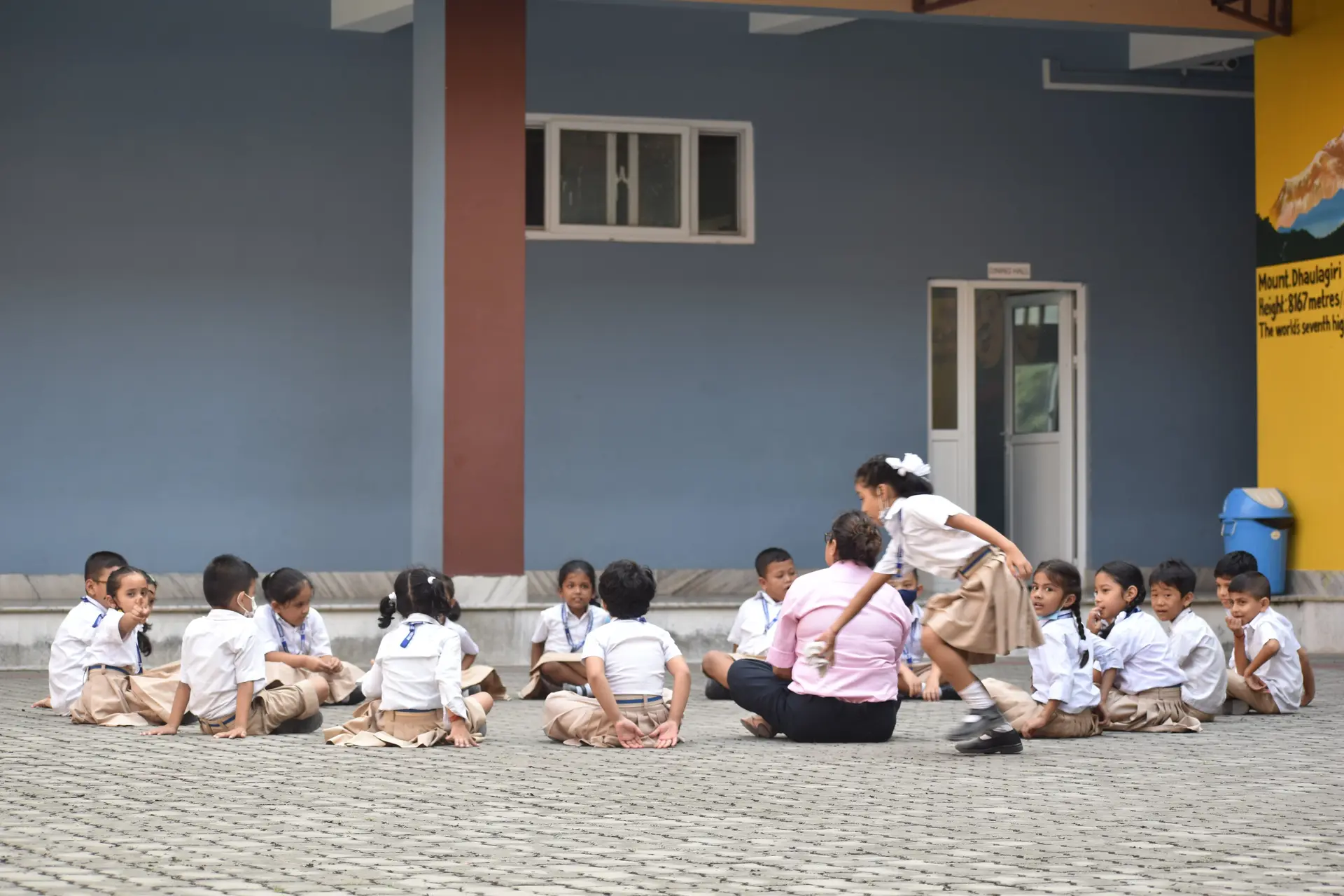
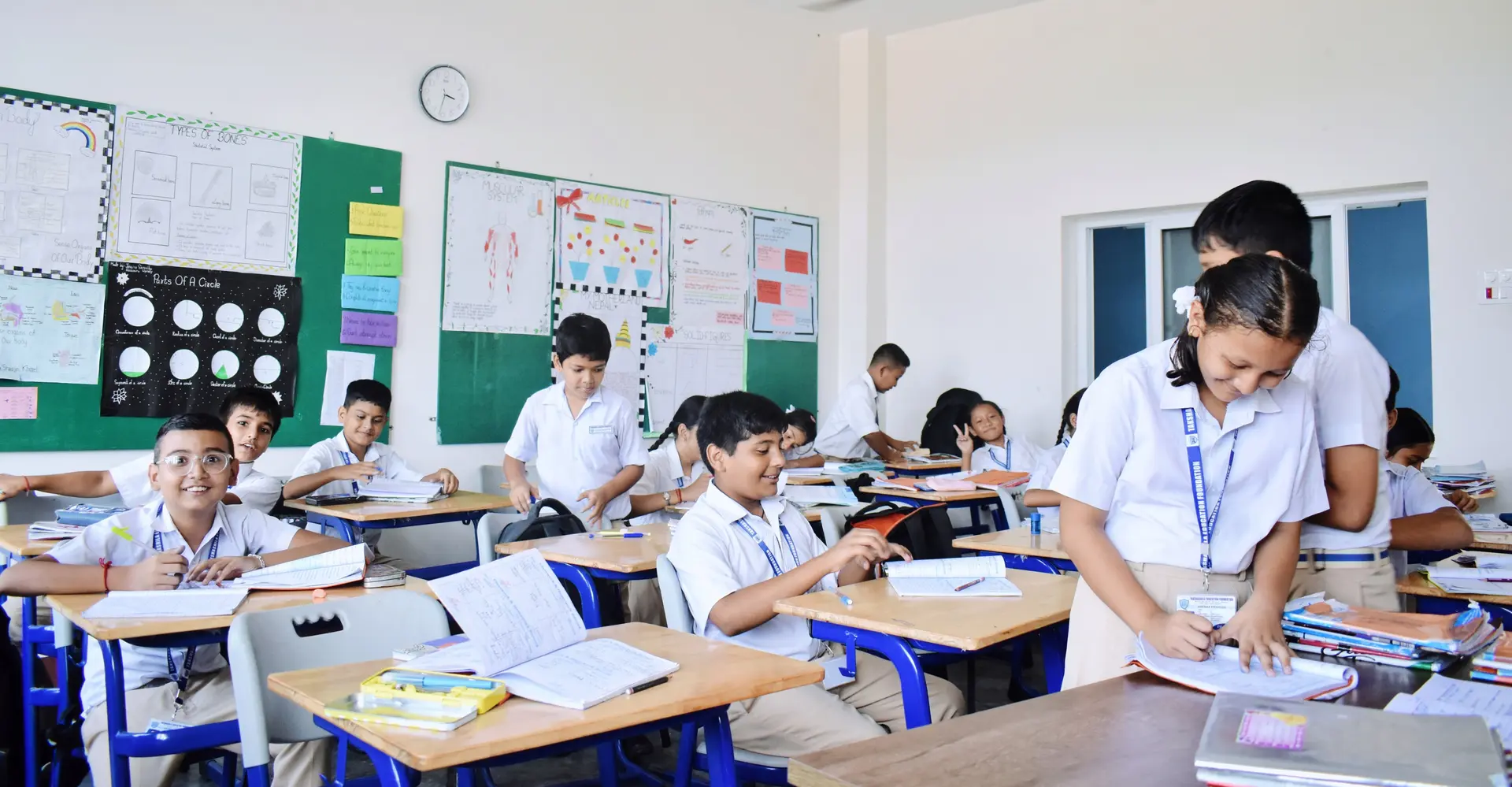
Students learn through structured inquiry, developing curiosity and a love for learning that will last a lifetime.
Students are encouraged to take action based on their learning, making a positive difference in their communities.
The programme develops international-mindedness and helps students understand their place in a global community.
Students explore big ideas through key concepts: form, function, causation, change, connection, perspective, responsibility, and reflection.
Students develop attributes of the IB Learner Profile: inquirers, knowledgeable, thinkers, communicators, principled, open-minded, caring, risk-takers, balanced, and reflective.
Students develop thinking, research, communication, social, and self-management skills that are essential for success.
Six Transdisciplinary Themes
The PYP is organized around six transdisciplinary themes of global significance, providing a framework for students to explore knowledge and skills across subject areas.
An inquiry into identity as individuals and as part of a collective through: Physical, emotional and spiritual health and well-being; Relationships and belonging; Learning and growing
An inquiry into identity as individuals and as part of a collective through: Patterns, cycles, systems; Diverse practices, methods, and tools; Discovery, design, innovation, possibilities, and impacts
An inquiry into histories and orientation in place, space and time through: Periods, events and artifacts; Communities, heritage, culture and environment; Natural and human drivers of movement, adaptation and transformation
An inquiry into systems, structures, and networks through: Interactions with and between social and ecological systems; Approaches to livelihoods and trade practice intended and unintended consequences; Representation, collaboration, and decision-making
An inquiry into the diversity of voice, perspectives, and expression through: Inspiration, imagination, creativity; Personal, social, and cultural notes and practices of communication; Intentions, perceptions, interpretations, and responses
An inquiry into the interdependence of human and natural worlds through: Rights, responsibilities, and dignity of all; Pathways to just, peaceful, and reimagined futures; Nature, complexity, coexistence, and wisdom
IB Learner Profile
The IB Learner Profile represents 10 attributes valued by IB World Schools. These attributes help individuals and groups become responsible members of local, national and global communities.
We nurture our curiosity, developing skills for inquiry and research. We know how to learn independently and with others.
We develop and use conceptual understanding, exploring knowledge across a range of disciplines.
We use critical and creative thinking skills to analyze and take responsible action on complex problems.
We express ourselves confidently and creatively in more than one language and in many ways.
We act with integrity and honesty, with a strong sense of fairness and justice, and with respect for the dignity and rights of people everywhere.
We critically appreciate our own cultures and personal histories, as well as the values and traditions of others.
We show empathy, compassion and respect. We have a commitment to service, and we act to make a positive difference in the lives of others and in the world around us.
We approach uncertainty with forethought and determination; we work independently and cooperatively to explore new ideas and innovative strategies.
We understand the importance of balancing different aspects of our lives—intellectual, physical, and emotional—to achieve well-being for ourselves and others.
We thoughtfully consider the world and our own ideas and experience. We work to understand our strengths and weaknesses in order to support our learning and personal development.
International Mindedness at TPES
International mindedness in the International Baccalaureate (IB) context refers to the understanding and appreciation of different cultures, perspectives, and global issues. It encourages students to think independently, make fair and ethical choices, and actively engage in discussions and collaborations that contribute to a more peaceful world.
International mindedness inspires students to be inquisitive and think before they act. Students who are trained in international mindedness are encouraged to ask lots of questions. They are required to make responsible choices and help others whenever they can so as to understand other perspectives.
International mindedness teaches students to be clear and confident communicators. Life throws several curveballs, some of which can be easily dodged through effective communication. Students under this learning module can effectively communicate in more than one language. They are taught to be active listeners and respectful towards others.
International mindedness encourages students to feel proud of who they are. International mindedness teaches students to be independent and capable. They are shown the importance of making honest and fair choices. These students respect and care about other people as well as the environment.
International mindedness exposes students to new cultures and experiences. One of the main objectives of this learning module is to train students to be open minded. They are taught to be aware of their similarities and differences with others and to respect both. Learning different things in multiple ways broadens their perspective further. International mindedness encourages students to try new things with a positive attitude and take the chance to be wrong sometimes.
International mindedness urges students to reflect on how they can improve. Under this learning module, students assess their work and analyze where their strengths and weaknesses lie. They understand the importance of a work-life balance and taught early on how to achieve it in their later life.
Today, the economical, ecological and political global situation is such that we can no longer continue to think just for ourselves, our family or our country. As a learning module, international mindedness understands this and therefore encourages students to take steps that will make this world a better place to live for themselves and for the generations to come!
The aim is to develop students who are informed and compassionate global citizens.
Academic Integrity
A principle in education and a choice to act in a responsible way so others can trust us.
Academic integrity is a principle in education and a choice to act in a responsible way so others can trust us. It means conducting all aspects of your academic life in a responsible and ethical manner. The IB expects students to produce genuine and authentic pieces of work, that represent their own abilities.
That is, the IB wants to support 'content creators', not 'content imitators'. Students should give credit where credit is due—be honest and transparent and recognize how previous work is influencing/supporting your own work.
Voice Choice Ownership
Empowering students to be agents of their own learning with voice, choice, and ownership.
The PYP Enhancements retain the core IB Philosophy of international mindedness and inquiry-based learning while putting new emphasis on student agency and individual learning. The IB defines student agency as 'the capacity to act intentionally' and give students voice, choice, and ownership of their learning.
At TPES this will mean empowering students to be more engaged in the direction of their learning, to make choices on the subject they want to inquire into, and to initiate action independently as a result of that learning.
PYP Exhibition
A celebration of learning and growth as students transition from the Primary Years Programme.
Students in their final year of the PYP Grade 5 participate in a culminating project, the Grade 5 PYP Exhibition. It is not only a celebration as students move from the Primary Years Programme into the Secondary School but also a final assessment where each student is required to demonstrate engagement with the essential elements of the PYP: knowledge, concepts, skills and action.
Students engage in a collaborative, transdisciplinary inquiry that involves them in identifying, investigating and offering solutions to real-life issues or problems.
As the culminating PYP experience, the exhibition reflects all the major features of the program and it includes regular and carefully planned assessment. Parents and students from TPES are invited to attend the Grade 5 Exhibition.
Why Choose IB PYP?
The IB Primary Years Programme offers numerous advantages that prepare students for success in an increasingly interconnected world.
Focuses on the development of the whole child—academically, socially, emotionally, and physically.
Develops students who are globally aware and understand their role in creating a better world.
Encourages curiosity and a love for learning through structured inquiry and exploration.
Connects learning across subject areas, helping students see the bigger picture and make meaningful connections.
Prepares students to be active, lifelong learners who take responsibility for their own education.
Provides a recognized framework that prepares students for further IB programmes and international education.
The IB Primary Years Programme prepares students to be active participants in a lifelong journey of learning. It encourages students to develop independence and to take responsibility for their own learning. The programme supports students' efforts to gain understanding of the world and to function comfortably within it, while also helping them develop personal values as a foundation upon which international-mindedness will flourish and personal attitudes that will contribute to their well-being throughout their lives.
For more information about the IB and its programmes, visit www.ibo.org
Entrust your future to us, trusting us is trusting in yourselves.
